
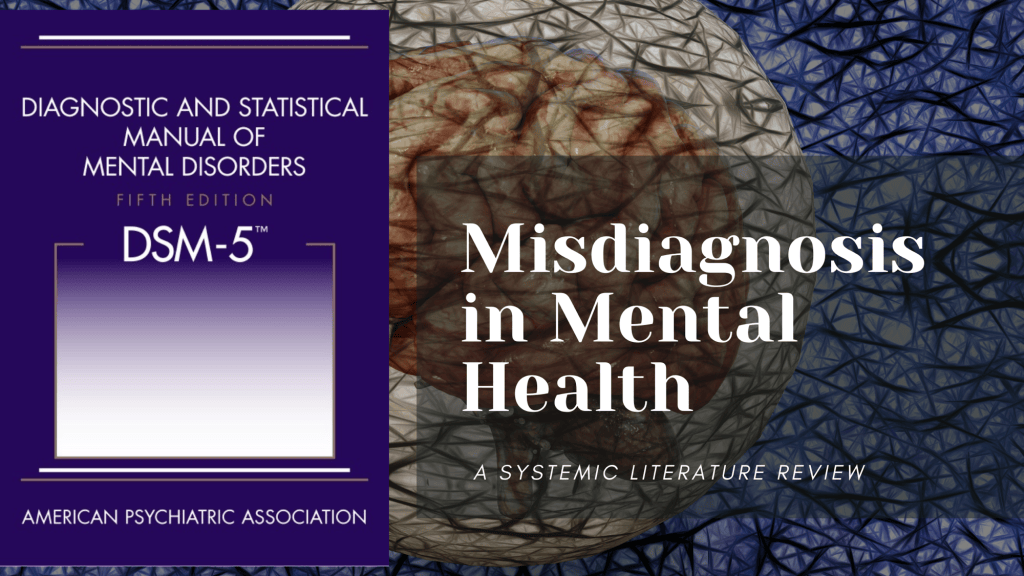
What are the systemic causes and individual consequences of misdiagnosis?
In this review article, I will be referencing literature on the systemic causes of misdiagnosis and the patient outcomes, with additional focus on anorexia nervosa, and connecting it to my own experiences with the diagnostic process.
Among the most commonly misdiagnosed mental illnesses are major depressive disorder (MDD), obsessive-compulsive disorder (OCD), bipolar disorder, and attention deficit hyperactivity disorder (ADHD). Sarah Fay, author of Pathological: The True Story of Six Diagnoses, had been diagnosed with all of them—and some more. Her memoir appeared as the topmost result of my search for relevant nonfiction books. As I read the vivid blurb, the words aligned, clicked, and fastened into place with my own beliefs. The weight of labels, questioning the system, crippling over-identification, “deeply researched exposé” (Fay)—I clicked “add to cart” before even reading the reviews. Upon scrolling down, a few critics found the book dismissive of the DSM, essentially terming it as DSM slander. The Diagnostic and Statistical Manual of Mental Disorders (DSM) is the widely used handbook for determining psychological disorders—“psychiatry’s diagnostic Bible”, as Fay puts it. Since its first publication in 1952, the DSM has been revised five times, each time updating diagnostic criteria. The most recent version, the DSM-5, is currently in use from 2022 (American Psychiatric Association).
When my copy of Pathological arrived, I quickly flipped through the book. Various variations of “DSM” saturated the pages, and snippets of avant-garde typography caught my eye. This would be no ordinary memoir, but the work of an iconoclast challenging a century-old system. Pathological implicitly denunciates the DSM, alternating between ambiguous personal narrative and plainly stated historical facts to argue the appalling inaccuracy of DSM diagnoses. Although, based on my background, I was predisposed to take Fay’s argument as gospel, I found myself oscillating between wholehearted agreement and page-marking skepticism between each chapter. At first, I read her bold statements with near veneration–the beliefs I had been conditioned to doubt had finally been given a voice. In the prologue, for instance, my supposedly idiosyncratic predicament and hazy hypotheses became inked into existence as Fay affirmed, ”I…thought in terms of [my six diagnoses], identified myself as them, medicalizing my difficulties and discomforts, pathologizing my emotions and thoughts and behaviors” (Fay 2). When Fay attests, “many elixirs were tried…the result was pain, monotony, confusion, and messiness”, she validates the prevalent experience for diagnostic errors to cause actual psychological harm (Fay 2). Her testament, and that of many other patients, is not merely a fleeting sentiment. Though specific sources aren’t cited just yet, negative patient outcomes after a misdiagnosis are well documented. A study on major depression in primary care published in the National Library of Medicine found that the overdiagnosed, false-positive group actually had “significantly higher levels of distress and impairment and were significantly more likely to have a history of mental health problems” compared to the true-positive group (Klinkman et al.). This finding shocked me like a splash of cold water. Cutting across the foggy field separating hard-wired from developed disorders, the clear link between false-positive diagnostic labels and grave mental outcomes should not be passed over. The study suggests that labels are not just an explanation of psychological suffering, but can directly trigger the onset of symptoms. Worse yet, we do not have to be the subjects of controlled clinical trials to receive a false diagnosis and its consequences. As Fay elucidates in Pathological, a combination of broadening criteria in the DSM, systemic flaws, monetary motivation, and skewed demographics gave rise to what she considers a substantially synthetic mental health epidemic.
To disentangle the roots of misdiagnosis is to reevaluate the DSM—its historical basis, numerous revisions, and overall extent of accuracy. The two most influential figures on the foundations of psychiatry were Emil Kraepelin and Sigmund Freud. Both born in 1856, they each carved distinct paths in the late 19th and early 20th centuries that diagnostic psychology still follows today. Kraepelin, dubbed the “father of modern psychiatry”, is best known for his transformative “Krapelian dichotomy”, or the classification of disorders based on broader patterns of symptoms (Ebert and Bär). He distinguished between manic depressive illness (bipolar disorder), which he believed to be episodic, and “dementia praecox” (currently known as schizophrenia), a presumably progressive, chronic disease. In spite of, or sometimes precisely because of Kraepelin’s indirect role in shaping the DSM and modern psychiatric practices, his work has received criticism on its social and scientific discontinuities. To start with, he sometimes made generalizations when connecting psychological theory with the sociohistorical climate at the time: Kraepelin has been cited as deeming socialists and those opposed to World War I mentally ill, and Jews dispositioned to be disordered. In retrospect, his statements seem absurd, highlighting how the framework of early psychiatry could be shaped by antiquated historical context, making it incompatible with society today. Yet generalized claims and systemic biases still lodge themselves within modern psychiatry, as will be discussed later. Moreover, Kraepelin is widely acknowledged as the first to propose that mental disorders have biological causes. He used a theoretical biological basis to distinguish between mental illnesses such as bipolar disorder and schizophrenia. Not only did relying on biological origins lead to generalizations and disregarding environmental factors, his theories were simply hypotheses. Without contemporary technology or an advanced understanding of neurobiology, his claims could not have been supported by quantitative empirical evidence (Fay 57). Recently, genome-wide sequencing has shown significant overlap between bipolar disorder and schizophrenia, largely disproving Krapelian assumptions of distinct genetic markers for every disease (Schulze et al.). The final nail in the coffin is Krapelin’s suspicion of his own work, conceding that “cases that cannot be classified are very common” and warning against viewing diagnostic criteria with absolute certainty (Miao). But ultimately, his tentative dichotomy would be integrated as rigid classifications in the DSM, solidifying speculative claims as fact and failing to account for inevitable diagnostic deviations.
On the other hand, Kraepelin’s contemporary Sigmund Freud is known for his psychoanalytic approach to psychiatry, which garnered much controversy throughout the 20th century. What many are not aware of, however, is the limited sampling pool of Freud’s work. Most of the foundational figures in early psychology were European and conducted studies on their countrymen (Messias). Kraepelin, a German, studied Germans. Freud, an Austrian neurologist, was even more selective of his subjects. As most psychiatrists at the time were, Freud was specifically sent to “treat the upper classes with mild complaints” (Fay 57). Aptly described by Fay as “a snob”, he only saw “patients with a certain education, class, and age”, refusing to see “psychotic patients, adolescents, and anyone older than fifty” (Fay 57, 58). The general population, whom Freud referred to as “trash”, was almost entirely left out of his work and that of many fundamental psychiatrists (qtd. in Fay 58). This narrow sampling calls into question if psychiatric criteria can truly be universal, especially for marginalized groups. The combination of diagnostic rigidity, generalizations, and gaps in population sampling on which psychology was founded upon leave substantial room for misinterpretation or outright error.
Like a house built on a creaky foundation with missing slabs, a diagnostic manual based on questionable hypotheses and incomplete demographics is bound to pose risks, no matter how many times it is remodeled. While Freudian psychoanalysis was purposefully phased out by the release of the DSM-III in 1980, Krapelian methodology persisted. The rise of neo-Krapelianism in the 1970s and its dominance in the current DSM crystallizes a diagnostic approach simultaneously generalized and rigid. By relying on an outdated model that has been constantly criticized for its lack of support from modern biomarkers, the potential for false positive diagnosis or a failure to account for variations within a correct diagnosis remains a heightened concern (Wakefield).
It should be noted that Kraepelin’s overwhelming influence on the modern DSM is not entirely negative. I found that occasionally, Fay’s statements made broad generalizations on the whole of psychiatry based on specific instances, such as citing one study funded by a pharmaceutical company and implying pharmaceutical companies (as a general term) theorized ADHD was biological (Fay 141). Paradoxically, I began questioning her credibility and felt an obligate curiosity towards the nuances of her claims. Thus, I sought to consider both sides of the argument to avoid confirmation bias. The Neo-Krapelian approach established that mental illnesses were influenced by biological factors and were not a complete social construct (Joober and Tabbane). It also cannot be denied that Krapelin was partially correct—several mental disorders are linked to genetic factors. I can attest to this as someone aware of how depression runs in my family. But overly relying on the premise of biological markers poses great risks for error. Molecular genome analyses show that over 71% of 1 MB segments in the human genome contain at least one marker for schizophrenia, many of which are noncoding and nonfunctional (Loh et al.). Additionally, the “omnigenic model” that mental illnesses are primarily pleiotropic (one gene causing a range of phenotypic effects) or polygenic (multiple genes contributing to one effect) suggest that disorders are associated with scattered, overlapping genes instead of distinct, specific causes. Therefore, the rigid Krapelian categorization utilized in the DSM risks oversimplifying the complex, often fuzzy borders between mental illnesses.
What does the oversimplification in diagnosis actually look like? Unfortunately, there’s no need for hypothetical situations: recent editions of the DSM provide concrete examples. The DSM-III “broadened the definition of depression” by failing to distinguish between causation by external or internal triggers and serious “melancholic” depression versus mild “neurotic” depression, causing an artificial surge in depression cases (Fay 77). Under the bombardment of reports on various mental health “epidemics” on the news, it is illuminating to realize that we cannot always jump to conclusions–such trends may actually be manufactured by changes to diagnostic criteria. The DSM-IV expanded diagnostic thresholds, placing increasingly common behaviors under severe diagnostic labels. Former chair of the DSM-IV task force Allen Frances admitted that “‘[DSM diagnoses confuse]‘mental disorder with the everyday sadness, anxiety, grief, disappointments, and stress responses that are an inescapable part of being human’” (qtd. in Fay 3). This line felt stunningly familiar. I couldn’t count the number of times my trivial behaviors were interpreted through a magnifying glass and labeled as proof of my disorder.
Still, a greater issue lies beyond the pathologization of normal behavior: what constitutes normalcy itself? After being conditioned to chase the concept of normalcy, reconsidering its meaning gave me a sense of freedom. “Normal” is highly vague and varies among cultural contexts—a notion that doesn’t require neuroscientific knowledge to grasp. I’ve been fortunate enough to visit 18 different countries and experienced firsthand how behavior considered acceptable in one nation might be unusual or alarming in another. Furthermore, systemic racism within a country may fail to consider marginalized populations in their definition of normal, leading to increased rates of diagnosis. For example, “Latinos are three times more likely to be diagnosed with psychotic illnesses” than whites, and Black people are almost two times more likely than whites to be diagnosed with schizophrenia (Fay 104). This made me question the impact of interpersonal and institutional stereotyping on rates of misdiagnosis.
As normal symptoms are increasingly classified into severe disorders, severe disorders are becoming normalized. It makes sense: the rise in social media usage, especially in teenagers still searching for their identities, provided both a platform to publicize one’s illness and identify with such content. The glamorization of mental illness is no new phenomenon—celebrity author Kay Redfield Jamison in the 80s and 90s “helped solidify the public perception of mental illness as ‘artistic’, even sexy”—but it has never been this pervasive (qtd. in Fay 158). Social media has raised awareness for and reduced the stigma of mental illnesses, but simultaneously birthed a culture of overdiagnosis. Mental disorders have been turned into a status symbol online, a “get-out-of-jail-free-card” (Ahuja and Fichadia). I began speculating that the romanticization of disorder could not only prompt an adoption of harmful labels, but also the celebration of sickness and dismissal of treatment. I can speak from my own experience. Sometime in middle school, an inexplicable desire to be different washed over me. Labels came across as a solid explanation and justification of suffering. I turned to online self-diagnosis. After failing the eating disorder test, I completed the depression assessment (leisurely, as if it were a BuzzFeed quiz) and became “moderately to severely depressed”. The diagnostic questions seemed strangely simple, but I didn’t reject my new “disorder” nor seek professional help for my newly awarded title.
The PHQ-9 assessment, commonly used in assessing depression, acquired most of its funding from the “pharma giant Pfizer” (Fay 145). The results of this test range from “minimal depression” to “severe depression”—there isn’t an option for not being depressed (Fay 145). It seemed incredible to believe that mental health assessments were biased, so I tested it myself by taking a commercial eating disorder quiz several times. Fay was right–the results ranged from “low risk” to “high risk”, even when selecting “No/Never” for every question. Could broadening diagnostic criteria be due not entirely to mistake, but also from corporate design? The U.S. is one of three countries in the world that allows “direct-to-consumer advertising for psychotropic medications” (Fay 93). In 2016, pharmaceutical companies spent almost 6 billion dollars on ads targeted towards consumers (Fay 93). It seems logical, then, that diagnostic thresholds are getting lower—pharma profits skyrocket as a result. The FDA warned that drug companies can make false claims for their products by sponsoring universities, such as Harvard, to conduct studies “proving” their efficacy (Fay 141). This creates the potential for patients to be improperly treated and prescribed medication that harms their physical and psychological health.
After researching the systemic origins of misdiagnosis, I decided to interview my primary care physician to better understand the diagnostic process. As I had an appointment approaching soon, I realized I could reframe my routine check-up into a way to exercise my curiosity while soaking up the clinical environment. The nurse led me down the narrow beige-walled, grey-carpeted corridor that seemed to squeeze in on itself, expelling a scent both sterile and sickly. In an accusatory tone, my mother ordered me to place my purse outside the room to ensure I wouldn’t manipulate my weight. Ever since I was diagnosed, I found myself victim to automatic suspicion, warranted more by the associations of my diagnostic label than the honest character I had upheld since childhood. The moment I trudged outside in a thin cotton dressing gown dotted with pale blue snowflakes, I felt like a patient, not a person—it was faintly humiliating.
“Turn around and step on the scale,” said the nurse in a gentle voice, but all I could focus on was my mother’s glare, her eyes narrowed with suspicion. When she asked the nurse to check my weight on a different scale, disbelieving the number that appeared, I realized if objective data couldn’t be trusted, I didn’t know what could. While waiting for my doctor, I sat sprawled on the tall exam table, trigonometry homework scattered around me. The symbol theta looked like the portal to a realm of predictable rules detached from reality, except it was blocked, and I could hear the hum of metal carts being rolled down the hall and doctors talking in the other room. Suddenly, the door opened, and my pediatrician walked in. She wore a white lab coat, black glasses, and a thick-tubed stethoscope around her neck.
“How are you doing?” she asked, talking in a careful tone. It was a simple question I developed a disproportionate hesitation towards answering. It felt wrong to lie and say “good”, but I feared further scrutiny if I confessed the truth. Briefly, she reported that my vitals were stable and asked if I had any questions. Purposefully keeping my voice balanced, not pointed, I described my research topic and asked if she had time for a quick interview. I was grateful for her enthusiasm to participate. She pulled up a small plastic chair and poised herself professionally while I looked down from the elevated exam table—an odd physical inversion to the clinical power dynamic I had begun to perceive. Based on her 26 years of experience in the medical field, she summarized how the mental health diagnostic process often involves standardized questionnaires, such as the PHQ-9, and referrals to a therapist. For both primary care and specialists, diagnoses are made according to DSM-5 criteria, supporting a systematic approach towards diagnosis. However, when asked if institutional policies such as on insurance shaped her diagnosis decisions, she refuted, “usually, as a pediatrician, it doesn’t really affect me that much”. This contradicted an article I read on intentional misdiagnosis which suggested that healthcare providers may overdiagnose patients to meet certain insurance criteria (Braun et al.). Learning from my physician’s experience qualified my understanding that insurance policies may affect diagnoses in certain situations, but not in all cases. Another claim I hoped to assess was the extent to which patient input is considered. My pediatrician explained that she considers the perspectives of patients and their families to prevent black-and-white diagnoses, but to a lesser extent when there is a risk of harm to oneself or others. She elaborated that such criteria sometimes falls into “a broad range—not that they’re definitely going to end their life, but are they harming themselves in different ways?” Her response ended on an inquiring note, hinting at the ambiguity around limitations surrounding patient testimony. Ultimately, the diagnostic process in primary care appeared to derive structure from the DSM and standardized questionnaires while leaving much up to subjective interpretation.
The fallacy consistently at play is the assumption that the presence of one symptom is proof of an umbrella-term disorder. People with anorexia nervosa tend to exhibit weight loss, but losing weight without intention does not automatically make someone anorexic. Or does it? In my case, it did. Anorexia nervosa, characterized by deliberate weight loss and an intense fear of weight gain, is the deadliest of all mental disorders (NHS). Due to its critical medical implications, diagnostic decisions are made urgently and patient autonomy is usually highly restricted during treatment. Further complicating this, any form of “denial” or questioning of the diagnosis is considered a sign of illness. When it comes to misdiagnoses, this label is a one-way shipment to improper treatment and an environment where newly sprouted symptoms take root.
After deciding to examine my misdiagnosis and its effects on my behavior, I began to search for similar experiences from others and supporting data. The chapter of Pathological I most looked forward to reading focused on Fay’s diagnosis of anorexia nervosa. I found that our stories shared a starting point in adolescence and later diverged in opposite directions–narratives that when woven together, create a comprehensive inspection on the outcomes of misdiagnosis. Similar to how my biological symptom (unintentional weight loss from overtraining) was attributed to a psychological origin, Fay was also diagnosed on a purely somatic cause: she had not eaten in days due to intense stomach discomfort (Fay 13). As will be detailed in my observations, the practice of assigning severe labels to physical problems introduces detrimental pathways. Another parallel was our metamorphosis from living under an empty label to fighting the mental burden of a full blown disorder. After reading The Best Little Girl In The World, Fay identified with the anorexic protagonist on the basis of their common diagnosis, then began mirroring her mindset. Fast-forward to the digital age, and it didn’t take long to stumble upon an eating disorder blogging community where users exchange disordered behaviors.
The treatment that ensued produced vastly different outcomes. Typically, eating disorders are treated with intensive therapy and forced meals. Despite numerous therapy sessions, Fay didn’t recover from anorexia until she moved out, saying “it helped that the eating disorders unit was far away…No longer defined by my -ia, no longer thinking in the appositive (Sarah, the anorexic), I stopped believing I was one” (Fay 29). She continues by detailing how her relationship with food healed on its own by surrounding herself with people who treated her as a normal person. The experience of healing naturally contradicts what my family had been told by corporate treatment specialists that eating disorders are chronic, and forced recovery is required to prevent “inevitable” relapse if individuals are given any autonomy. While forced treatment is vital if the patient is in a dangerous medical condition and refuses to take care of their health, removing autonomy where there is a strong motivation to educate oneself and recover is unnecessary and can induce more danger than the risks associated with freedom. Despite falling into the latter category, I was steered opposite of Fay’s resolution and towards forced recovery. As a naturally rebellious individual, as a typical teenager, I indiscriminately resent anything forced upon me. When I was forced to exercise, it felt like a dreaded chore. Only when the pressure loosened did movement transform into a joyful, effortless habit. In the same way, when meals and restrictions on physical activity were enforced, my spark of self-motivation was extinguished in light of a new, burning loathing for food and everything related to it. In context of my previous experiences and personality, this aversion would only be a fleeting, visceral reaction, an involuntary reflex response. But to an online treatment team of complete strangers, it was proof that the one solution to recovery would be more restrictions on my independence. The treatment team rarely asked for my input, but relied on my mother’s interpretations while feeding her generalized content on other patients’ struggles. I wondered whether observations by a parent clearly anxious about their child’s condition and having absorbed stories of stereotypical cases might be subject to confirmation bias, prolonging the recovery process. When I tried to voice more individualized approaches to recovery or suggested the current system wasn’t working for me, it was either deemed a sign of ongoing illness or simply ignored. Under this broad approach, I was treated for every symptom associated with the diagnosis, whether I actually had it or not. It was like making an acquaintance with one symptom and being sent to a networking event with each associated symptom, obligated to fraternize with the crowd in a closeted, ceaseless cycle. I developed new symptoms from the assumption that they were already present. For instance, after unwarranted lectures on body image, I started taking notice of my appearance.
I understood, however, that thoughts alone are not substantial enough to evidence the implications of misdiagnosis. Seeking numerical data, I asked my therapist if I could see a graph of my monthly mood and anxiety assessments. To my surprise, I saw the scores trending downwards, indicating apparent improvement. How could this be, when I felt my mental health deteriorating over time? It turns out that “having a psychiatric or psychosomatic misdiagnosis [is] linked with a higher chance of under-reporting symptoms, and of health care avoidance” (Akers). It’s only logical for overdiagnosed patients to fear increasing the perceived severity of their situation and to lose trust in institutions that fail to assess them accurately.
Despite showing measurable, consistent progress, recovery became more and more rigid. I felt betrayed. I was promised incremental independence alongside growing medical stability, but this seemingly concrete plan had disintegrated. This was no mistake—the team professed my growing compliance as a step forward in recovery. But I didn’t comply because my situation was any more acceptable; I began to believe I didn’t deserve any better. Indeed, it’s common for misdiagnosed patients to feel undeserved self-blame, to interpret the lack of progress in their innately unsuitable treatment plan as a personal failing (Akers). The criteria my treatment was being measured by—so hyperfocused on superficial behaviors—excluded my general well-being, which was steadily declining. Disordered thoughts crossed my mind with increasing persistence, ranging from jealousy towards plants and their ability to photosynthesize to believing this vicious cycle of misunderstanding could only end if my life did. These thoughts were no benign byproducts. They frequently disrupted my sleep, impeding my focus at school. Whenever my distress was detected, it was interpreted through the lens of my diagnosis. To the treatment team, I was not upset about the unavailing system, but body image, food, and weight. Effectively, my exit ticket from recovery, judged by endlessly shifting criteria, was further complicated by a positive feedback loop where the consequences of misdiagnosis affirmed my confinement within it. Yet it was futile for me, a patient, to argue against evidence-based treatment. While “evidence-based” sounds impressive, it’s a vague term with little implications on efficacy. As an AP Biology student, I learned how experiments are performed with systematic precision. It would be scientifically abominable to throw various solutions and cells into a single petri dish, observe the results, and come to an “evidence-based” conclusion. Instead, we must conduct multiple tests for each variable, establish control groups, then isolate the tested factor before finally making any conclusions. Likewise, declaring one form of treatment universally applicable only because it produced results eventually is methodologically incomplete. How would you know if it is truly effective without comparison against a control group? Could treatment bring greater efficiency and less harm if more individualized methods were tested, or even considered beyond the limits of systemic tunnel vision? These possibilities are exactly what makes the topic of misdiagnosis less exclusively an infuriating loop, but an untapped reservoir of hope.
Works Cited:
Ahuja, Jai, and Palak A. Fichadia. “Concerns Regarding the Glorification of Mental Illness on Social Media.” Cureus, vol. 16, no. 3, 21 Mar. 2024, http://www.cureus.com/articles/238553-concerns-regarding-the-glorification-of-mental-illness-on-social-media#, https://doi.org/10.7759/cureus.56631.
Akers, Gaan. “The Impact of Mental Health & Mental Illness Misdiagnosis.” Hillside, 18 Oct. 2019, hside.org/impact-of-mental-health-misdiagnosis/. Accessed 9 Mar. 2026.
American Psychiatric Association. “What Is the DSM?” Psychiatry.org, 2025, http://www.psychiatry.org/patients-families/what-is-the-dsm.
Bar, Karl-Jurgen, and Andreas Ebert. “Emil Kraepelin: A Pioneer of Scientific Understanding of Psychiatry and Psychopharmacology.” Indian Journal of Psychiatry, vol. 52, no. 2, 2010, p. 191. National Library of Medicine, http://www.ncbi.nlm.nih.gov/pmc/articles/PMC2927892/, https://doi.org/10.4103/0019-5545.64591.
Braun, Sharon A., and Jane A. Cox. “Managed mental health care: intentional misdiagnosis of mental disorders.” Journal of Counseling and Development, vol. 83, no. 4, fall 2005, pp. 425+. Gale In Context: High School, link.gale.com/apps/doc/A138142296/SUIC?u=sant86132&sid=bookmark-SUIC&xid=08511231. Accessed 9 Mar. 2026.
Cohen, Bruce. “Emil Kraepelin.” Researchgate.net, 1 Jan. 2014, http://www.researchgate.net/publication/372511936_Emil_Kraepelin?__cf_chl_tk=lESpmQIKISnLn8byH1zHMQZ1TU16XBRJeBIHWSnmACA-1776054886-1.0.1.1-FMVAqcd.FBTg7fjBZN2cx3CFAsyiexq490mBfiryVGhLI4.
Craddock, Nick, and Michael J. Owen. “The Kraepelinian Dichotomy – Going, Going … but Still Not Gone.” British Journal of Psychiatry, vol. 196, no. 2, Feb. 2010, pp. 92–95, https://doi.org/10.1192/bjp.bp.109.073429.
Ecks, Stefan. “The Strange Absence of Things in the “Culture” of the DSM-V.” Canadian Medical Association Journal, vol. 188, no. 2, 9 Nov. 2016, pp. 142–143, https://doi.org/10.1503/cmaj.150268.
Fay, Sarah. Pathological. HarperCollins, 2022. 2, 13, 29, 57, 58, 77, 93, 104, 141, 145.
Heynick, Frank. “Sigmund Freud and Emil Kraepelin: 150 Years Old.” Psychiatric News, vol. 41, no. 8, 21 Apr. 2006, pp. 31–37, https://doi.org/10.1176/pn.41.8.0031.
Joober, Ridha, and Karim Tabbane. “From the Neo-Kraepelinian Framework to the New Mechanical Philosophy of Psychiatry: Regaining Common Sense.” Journal of Psychiatry & Neuroscience, vol. 44, no. 1, 1 Jan. 2019, pp. 3–7, https://doi.org/10.1503/jpn.180240.
Klinkman, M. S. “False Positives, False Negatives, and the Validity of the Diagnosis of Major Depression in Primary Care.” Archives of Family Medicine, vol. 7, no. 5, 1 Sept. 1998, pp. 451–461, https://doi.org/10.1001/archfami.7.5.451.
Loh, Po-Ru, et al. “Contrasting Genetic Architectures of Schizophrenia and Other Complex Diseases Using Fast Variance-Components Analysis.” Nature Genetics, vol. 47, no. 12, 2 Nov. 2015, pp. 1385–1392, https://doi.org/10.1038/ng.3431.
Messias, Erick. “Standing on the Shoulders of Pinel, Freud, and Kraepelin.” The Journal of Nervous and Mental Disease, vol. 202, no. 11, Nov. 2014, pp. 788–792, http://www.ncbi.nlm.nih.gov/pmc/articles/PMC4334561/, https://doi.org/10.1097/nmd.0000000000000208.
Miao, Guodong. “Several Thoughts on Emil Kraepelin’s Biography.” Journal of Psychiatry and Brain Science, vol. 1, no. 3, 25 Aug. 2016, https://doi.org/10.20900/jpbs.20160012.
NHS. “Symptoms – Anorexia.” Nhs.uk, 11 Feb. 2021, www.nhs.uk/mental-health/conditions/anorexia/symptoms/.
Rybakowski, J.K. 120th Anniversary of the Kraepelinian Dichotomy of Psychiatric Disorders. Curr Psychiatry Rep 21, 65 (2019). https://doi.org/10.1007/s11920-019-1048-6
Schulze, Thomas G., et al. “Molecular Genetic Overlap in Bipolar Disorder, Schizophrenia, and Major Depressive Disorder.” The World Journal of Biological Psychiatry, vol. 15, no. 3, 9 Mar. 2012, pp. 200–208, https://doi.org/10.3109/15622975.2012.662282.
Storr, Anthony. Freud: A Very Short Introduction. Oxford, Oxford University Press, 2001.
Wakefield, J. C. “DSM-5, Psychiatric Epidemiology and the False Positives Problem.” Epidemiology and Psychiatric Sciences, vol. 24, no. 3, 2015, pp. 188–196, http://www.cambridge.org/core/journals/epidemiology-and-psychiatric-sciences/article/div-classtitledsm-5-psychiatric-epidemiology-and-the-false-positives-problemdiv/7F1A6E602D64D4663766ED5FF9B551A1, https://doi.org/10.1017/s2045796015000116.
Wakefield, Jerome C. “Klerman’s “Credo” Reconsidered: Neo‐Kraepelinianism , Spitzer’s Views, and What We Can Learn from the Past.” World Psychiatry, vol. 21, no. 1, 11 Jan. 2022, pp. 4–25, https://doi.org/10.1002/wps.20942.


Leave a Reply